Metadata
aliases: []
shorthands: {}
created: 2021-10-26 15:01:57
modified: 2022-01-19 16:45:35
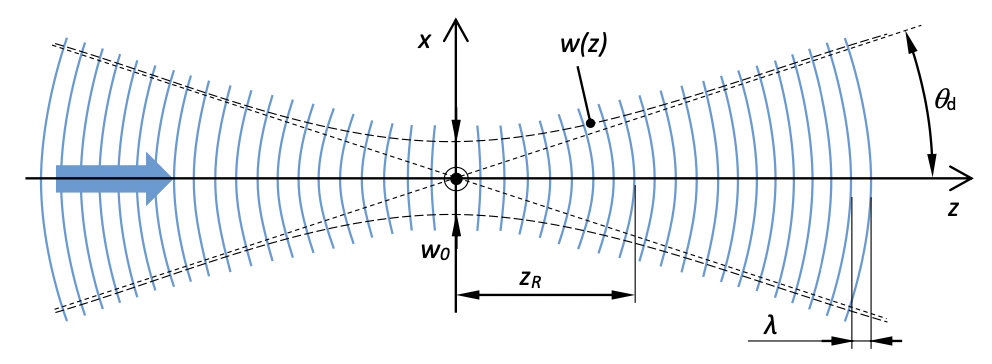
In the case of free propagation, the Gaussian beam solves the paraxial Helmholtz equation. The most simple mathematical form of a Gaussian beam that has circular symmetry around the
Where
and
The evolving beam has a radius measured at the
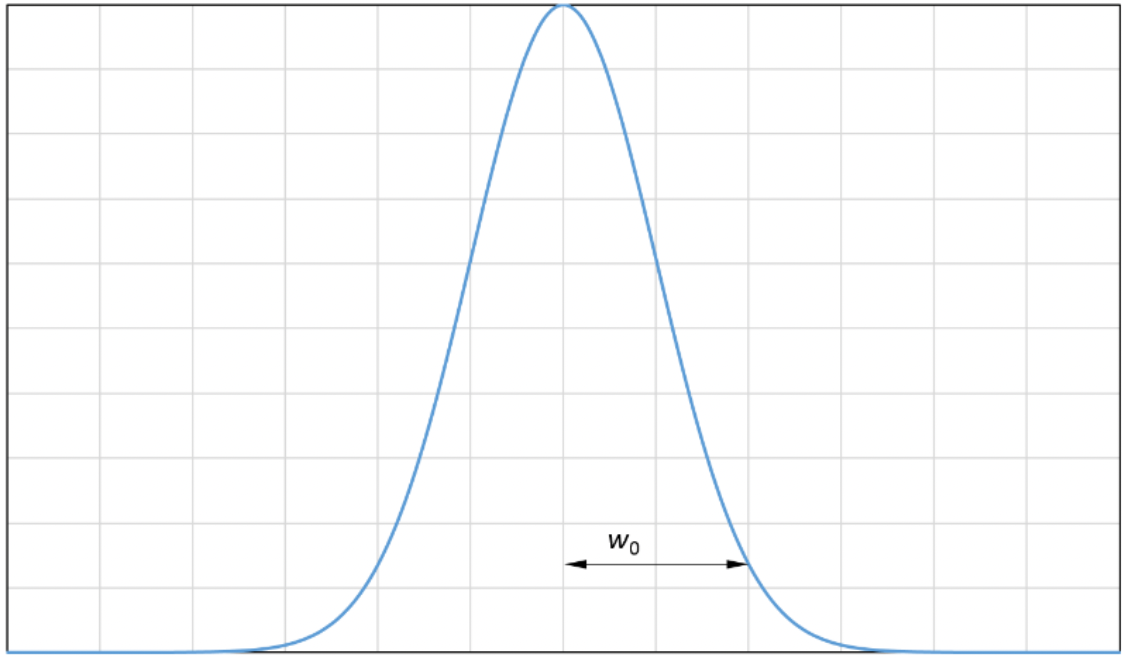
The radius of the beam increases along the
The radius of the curvature of the wavefronts of the beam:
When
The curvature is zero at the waist and it is the largest at the Rayleigh distance
The beam radius here is:
The Gouy phase advance gradually acquired by a beam around the focal region. It results in an increase in the apparent wavelength near the waist.
The relative change in the wavelength at
Example of how the Gouy phase changes along
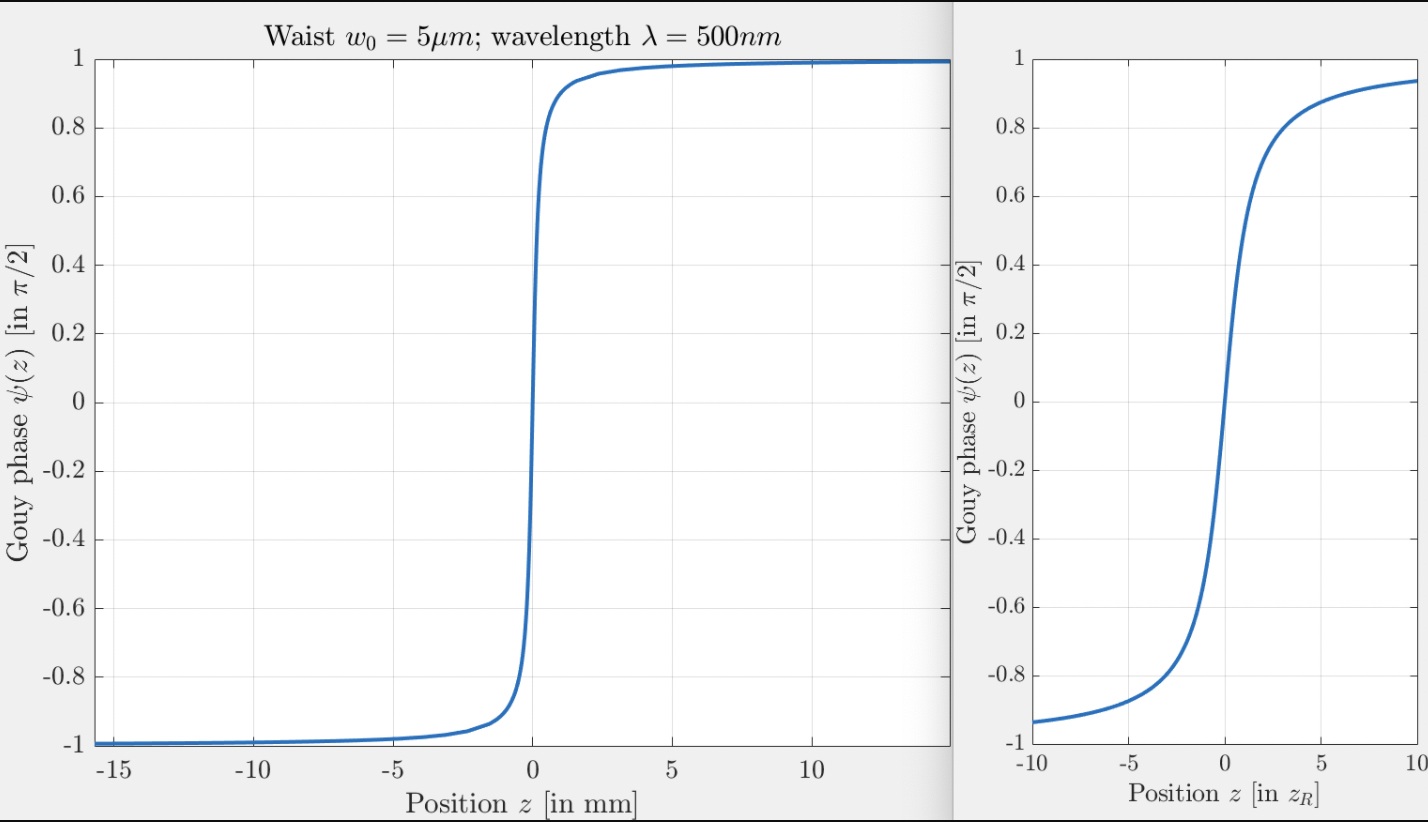
When
The Gaussian beam has the smallest divergence of any type of beam possible (it is analogous to the Gaussian wave packet in quantum mechanics, the paraxial Helmholtz equation even looks the same as the Schrödinger equation).
Can be expressed as a relation of the waist radius and the wavelength: